





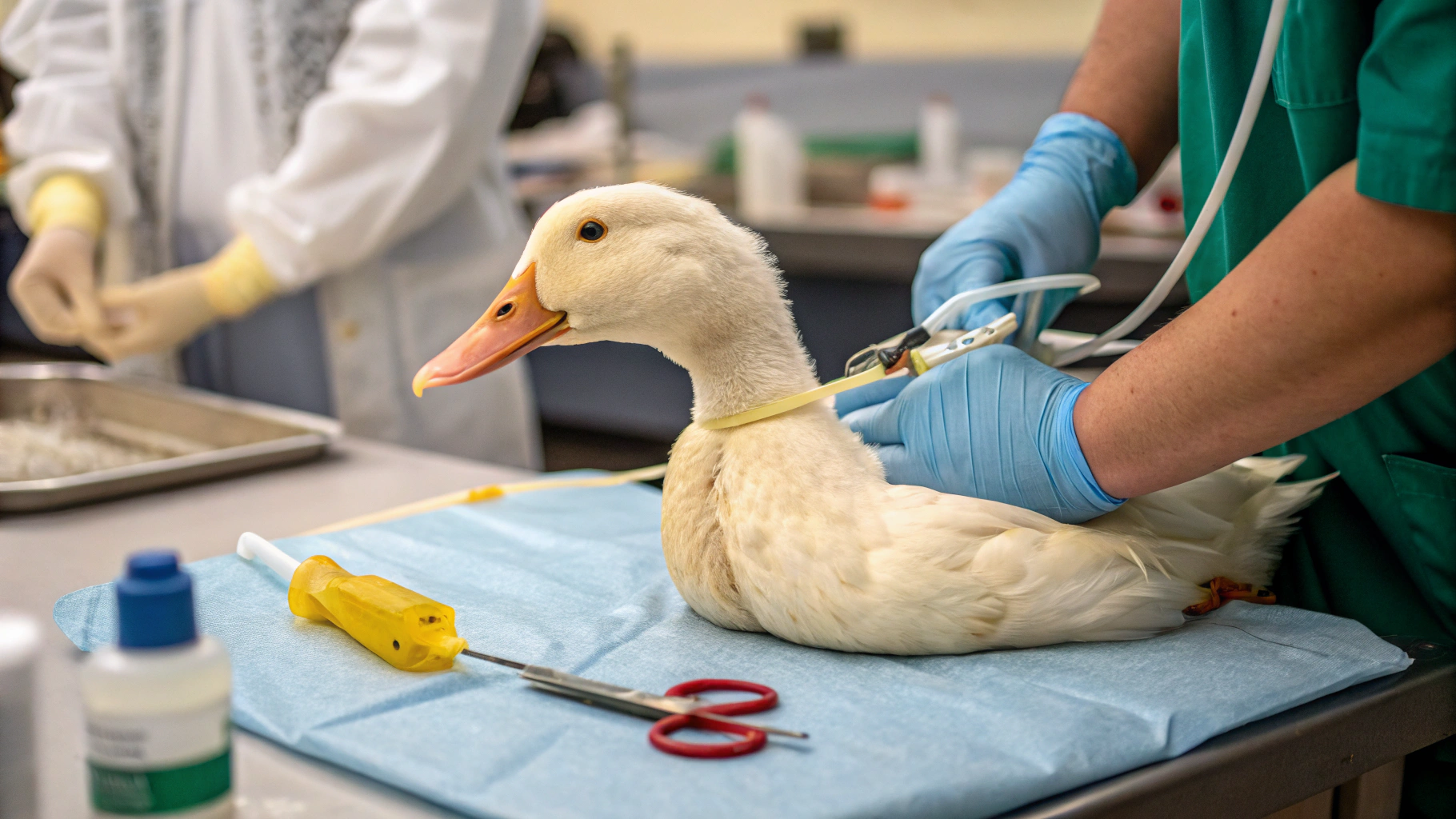
Duck artificial insemination is a modern breeding technique used to improve fertility, genetics, and production in duck farming. It allows farmers and breeders to control mating without relying only on natural reproduction.
This method is especially useful in commercial farms where efficiency and genetic quality matter. Artificial insemination helps overcome problems like low fertility and uneven breeding results.
It is widely used for meat, egg, and breeding stock production. This guide explains duck artificial insemination in easy words for clear understanding.
What Is Duck Artificial Insemination?
Duck artificial insemination is the process of collecting semen from a male duck and placing it into the reproductive tract of a female duck by hand. It does not require natural mating. The process is carefully timed to match the female’s egg-laying cycle. This technique increases the chances of fertilization. It also allows better control over breeding results. Many commercial farms prefer this method for consistency.
Why Artificial Insemination Is Used in Ducks?
Artificial insemination is used because some duck breeds have low natural mating success. Heavy breeds and commercial lines often struggle with natural fertility. This method improves hatch rates and productivity. It also reduces stress and injury during mating. Overall, it helps maintain stable breeding performance.
Importance of Duck Artificial Insemination
Duck artificial insemination plays an important role in modern poultry farming. It supports genetic improvement and efficient reproduction. Farmers can select the best males for breeding. This leads to healthier and more productive offspring. It also reduces the need for keeping many male ducks. The method saves space and resources.
Genetic Improvement
Artificial insemination allows farmers to use semen from high-quality male ducks. This improves traits like growth, egg production, and disease resistance. Genetic control helps maintain strong breeding lines. Over time, flock quality improves. This is a major benefit of the technique.
Equipment Needed for Duck Artificial Insemination
Basic equipment is required to perform duck artificial insemination safely. This includes clean collection tools and simple insemination devices. Hygiene is very important to avoid infections. Tools must be cleaned and handled carefully. Proper equipment ensures better results. Simple setups are often enough for small farms.
Hygiene and Safety
Cleanliness is critical during the process. Dirty equipment can cause infections and reduce fertility. Hand washing and tool sterilization are necessary. A clean environment improves success rates. Safety protects both ducks and handlers.
Insemination Process in Female Ducks
The insemination process involves placing semen into the female duck’s reproductive tract. Timing is important for success. It is usually done shortly after egg laying. The process is quick and causes minimal discomfort. Proper technique ensures effective fertilization. Skilled handling improves results.
Timing and Frequency
Timing insemination correctly improves fertility rates. It is often done every few days during the laying cycle. Over-insemination is avoided to reduce stress. Balanced timing supports healthy reproduction. Planning is essential.
Advantages of Duck Artificial Insemination
There are many advantages to using artificial insemination in ducks. It increases fertility and hatchability. Farmers can reduce the number of male ducks needed. It also improves genetic selection. The process is controlled and predictable. These benefits make it popular in commercial farming.
Better Productivity
Artificial insemination leads to more consistent production. Egg fertility rates improve noticeably. This increases the number of healthy ducklings. Higher productivity supports farm profitability. It also reduces losses.
Challenges of Duck Artificial Insemination
Despite its benefits, duck artificial insemination has some challenges. It requires skill and training. Improper technique can reduce success rates. Handling stress must be managed carefully. Initial setup may take time. However, these challenges can be overcome with practice.
Need for Training
Proper training is important for success. Beginners may need time to learn the technique. Mistakes can affect fertility. Training improves confidence and results. Experience makes the process easier.
Animal Welfare Considerations
Animal welfare is important in duck artificial insemination. Ducks must be handled gently. Stress and injury should be avoided. Humane practices ensure ethical breeding. Calm handling improves cooperation and results.
Reducing Stress
Stress reduces fertility and health. Gentle handling keeps ducks calm. Quiet environments help during the process. Reduced stress leads to better outcomes. Welfare and productivity go together.
Use of Artificial Insemination in Commercial Farming
Commercial duck farms widely use artificial insemination. It supports large-scale production. Uniform breeding results are achieved. This method suits modern farming systems. It helps meet market demand efficiently.
Conclusion
Duck artificial insemination is an effective and valuable breeding technique in modern duck farming. It improves fertility, genetic quality, and productivity. With proper training, hygiene, and nutrition, high success rates can be achieved.
The method supports both small and large farms. Animal welfare remains an important part of the process.
Overall, duck artificial insemination helps farmers achieve better and more reliable breeding results.
FAQs
1. What is duck artificial insemination?
Duck artificial insemination is a method where semen from a male duck is manually placed into a female duck. It improves controlled breeding.
2. Why is artificial insemination used in ducks?
It is used to increase fertility and improve genetics. It also helps when natural mating is less effective.
3. Is duck artificial insemination safe?
Yes, when done correctly and hygienically, it is safe for ducks. Proper handling reduces stress and injury.
4. Does artificial insemination hurt ducks?
No, the process is quick and causes minimal discomfort. Gentle handling ensures animal welfare.
5. How often is insemination done in ducks?
It is usually done every few days during the laying cycle. Timing depends on farm practices.
6. What equipment is needed for duck artificial insemination?
Basic collection and insemination tools are needed. Cleanliness and hygiene are very important.
7. Can small farms use duck artificial insemination?
Yes, small farms can use it with basic training. Simple equipment is enough to start.
8. Does nutrition affect insemination success?
Yes, good nutrition improves semen quality and egg fertility. Balanced diets are important.
9. Is training required for artificial insemination?
Yes, training helps ensure proper technique and higher success rates. Experience improves results.
10. What is the future of duck artificial insemination?
The future is positive with better techniques and technology. It will continue to support efficient duck breeding.




Leave a Reply